


Insights
How Universities Are Enhancing Campus Safety
8 April 2026In today’s university environments, traditional security methods are no longer sufficient to address the growing complexities and risks.
University campuses are dynamic, open environments designed to encourage collaboration, accessibility and community. Large student populations, extended operating hours, and multiple buildings spread across wide areas require security approaches that are far more sophisticated than traditional, standalone systems.
To meet these demands, universities are increasingly enhancing campus safety through integrated technology ecosystems that connect communications, video, data and analytics. Rather than relying on isolated tools, this unified approach enables coordinated responses, improved situational awareness and more informed decision making across campus operations.

Unified Communications for Faster Coordination
Effective communication is the foundation of campus safety. In critical situations, the ability for security teams, staff and authorised responders to communicate clearly and instantly can significantly affect outcomes.
Many universities are moving away from fragmented communication systems towards integrated platforms that support voice and data sharing across teams. Reliable two-way radio communications play a key role in this environment, particularly across large and high‑noise areas such as lecture theatres, sporting facilities and outdoor precincts. When integrated with other campus systems, these devices ensure that frontline teams remain connected, informed and able to coordinate responses in real time.
This integrated communication model reduces delays, minimises confusion and supports a more coordinated approach to incident management, allowing universities to respond quickly and confidently to emerging risks.
Video and Visibility to Support Situational Awareness
Visibility is another critical element in modern campus safety strategies. Universities are using video technologies not simply as recording tools, but as active contributors to situational awareness and accountability.
Body worn cameras are increasingly utilised by campus security teams to provide clear, unbiased records of interactions and incidents. Their presence supports transparent security operations, enhances staff confidence and can help de‑escalate confrontational situations. When integrated with communications systems, video data can be accessed in real time, enabling supervisors and control rooms to make better‑informed decisions during incidents.
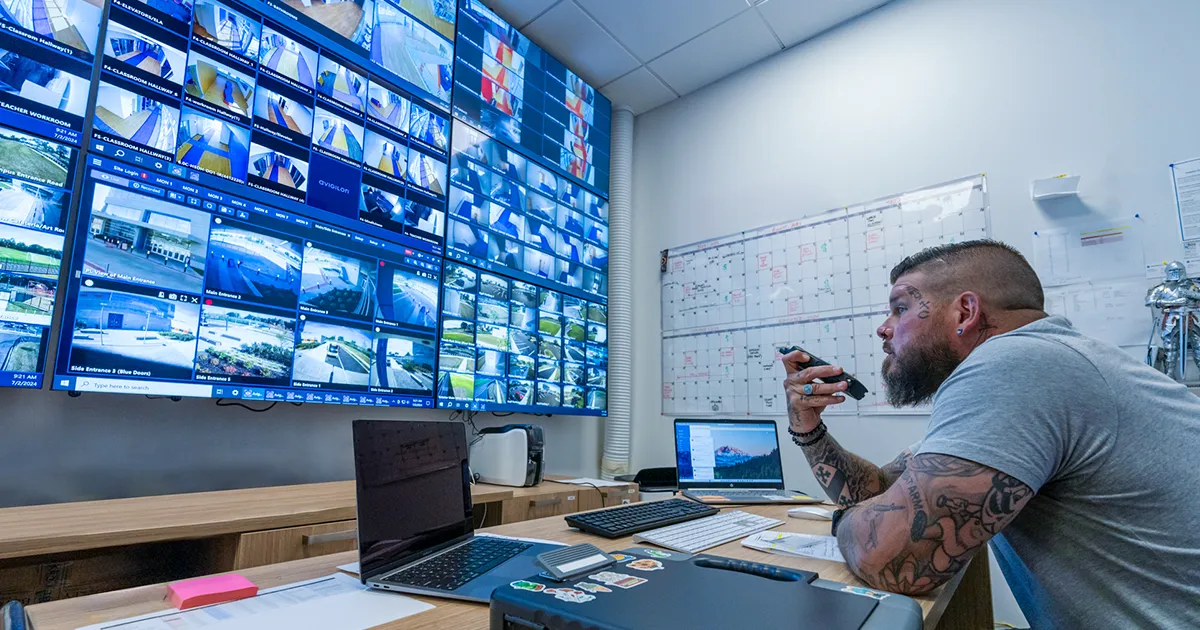
Fixed video surveillance also plays an important role, particularly when connected to a broader security ecosystem. By linking video feeds with access control systems and communication platforms, universities gain a more complete operational view of events as they unfold.
Real-Time Alerts and Interoperability Across Systems
One of the most significant shifts in campus safety is the move towards interoperability. Rather than operating in silos, modern security technologies are designed to work together, sharing information across platforms.
Integrated ecosystems allow alerts from fire panels, access control systems and smart sensors to be delivered directly to security teams in real time. In situations such as medical emergencies, fires or unauthorised access, this immediate flow of information supports faster assessment and response. Security personnel can quickly understand what is happening, where it is occurring and who needs to be involved.
By enabling systems to communicate seamlessly, universities reduce manual processes and improve their ability to manage incidents efficiently, even across large or multi-site campuses.
Data and Analytics Driving Proactive Safety Strategies
Beyond day‑to‑day incident response, integrated security systems generate valuable data that can be used to strengthen long‑term safety planning. Universities are leveraging analytics to identify patterns, trends and recurring risks across their campuses.
This data-driven approach allows institutions to deploy resources more effectively, focusing attention on high‑risk areas or times. Over time, insights gained from incident data support continuous improvement, helping universities refine security protocols and move from reactive responses towards proactive risk management.
Used responsibly and securely, analytics empower universities to make evidence‑based decisions that enhance safety outcomes for students, staff and visitors.
Delivering Integrated Campus Safety Outcomes
CSE Crosscom works alongside Australian universities to design and deliver integrated safety and security ecosystems that align with the operational realities of campus environments. By connecting voice, video, data and analytics into a unified framework, universities can strengthen coordination, improve visibility and support confident, timely decision making.
CSE Crosscom’s end‑to‑end capability covers planning, network design, engineering, implementation and ongoing support, ensuring security solutions are reliable, scalable and ready to evolve as campus needs change. Through close collaboration with customers, solutions are tailored to campus layouts, operational requirements and long‑term objectives.
Supporting Safer, Smarter Campuses
University campuses continue to grow and change, and safety strategies must adapt with them. Integrated security ecosystems provide the flexibility and resilience universities need to protect people, property and learning environments today and into the future.
To explore how an integrated approach to campus safety can support your institution, contact CSE Crosscom to speak with our specialists about tailored safety and security solutions.